Easy Life Size Gingerbread House | Holiday Baking Project
When the gingerbread panels come out of the oven, they're dark amber at the edges and still soft in the center, filling the kitchen with warm spice and molasses.
Molasses, ground ginger and cinnamon give the dough its deep color and snap once cooled, while royal icing acts as the glue holding your life size gingerbread house together. This is a project for a weekend with kids, a holiday party centerpiece, or anyone who wants a baking challenge bigger than cookies.
| Prep | Cook | Total | Servings | Difficulty |
|---|---|---|---|---|
| 1 h 30 min | 1 h | 4 h | 1 gingerbread house (8-10 servings) | Advanced |
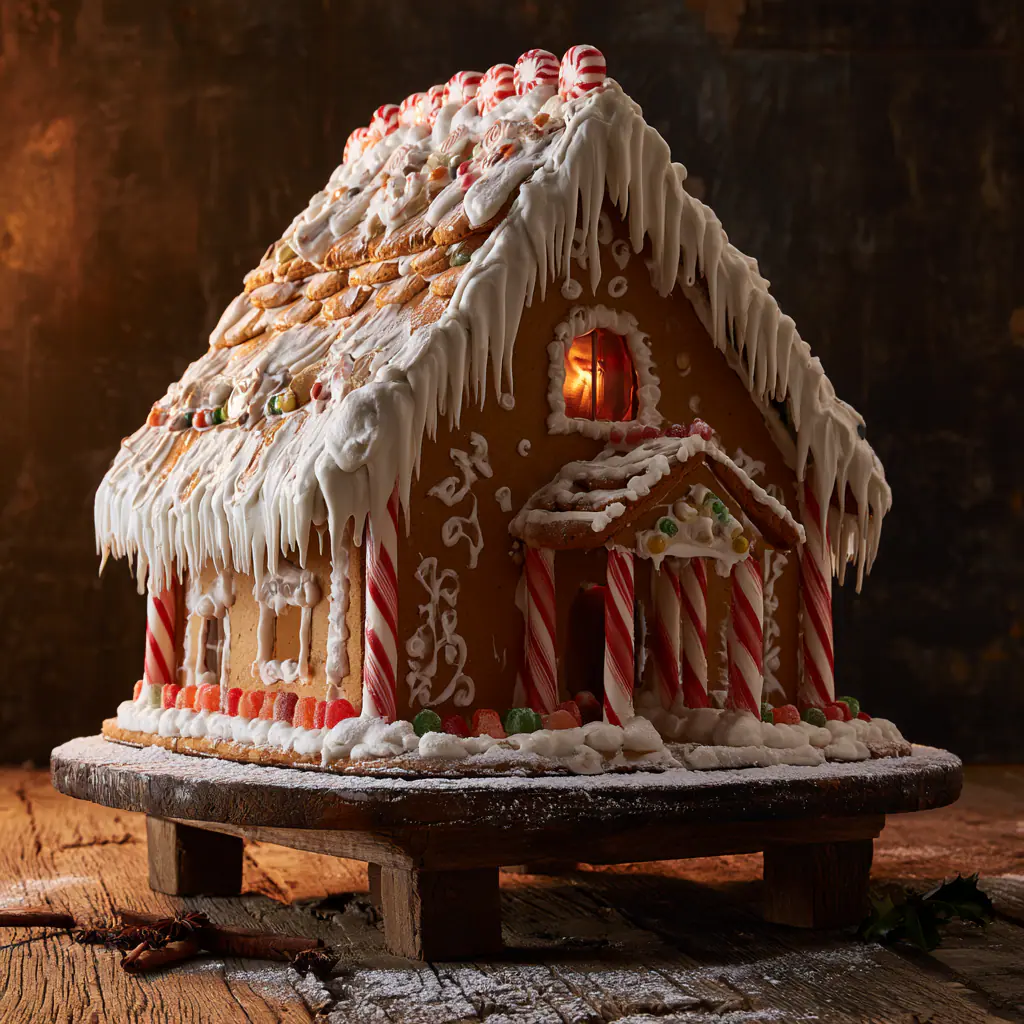
A Closer Look at the Technique
The dough for a life size gingerbread house needs to be thicker and sturdier than regular cookie dough, almost like a stiff bread dough you can roll to a quarter inch without tearing. Roll it directly on parchment paper so you can slide the whole panel onto a baking sheet without distorting the shape. Watch the edges: when they turn a shade darker than the center and feel firm (not soft) to a light touch, pull the pan. Let each panel cool completely and flat before touching it, because warm gingerbread bends and cracks as it cools unsupported. The royal icing should be thick enough to hold a ribbon trail for a few seconds before it melts back into the bowl; that's your glue consistency for the walls.
Why This Recipe Works
- Sturdy by design: the dough is firmer than regular gingerbread cookies, so panels hold their shape under weight.
- One dough, many pieces: you make a single batch and cut templates for walls, roof and trim, so there's no extra mixing.
- Make-ahead friendly: panels bake days before assembly, which spreads the project over a weekend instead of one long day.
Gingerbread House Ingredients
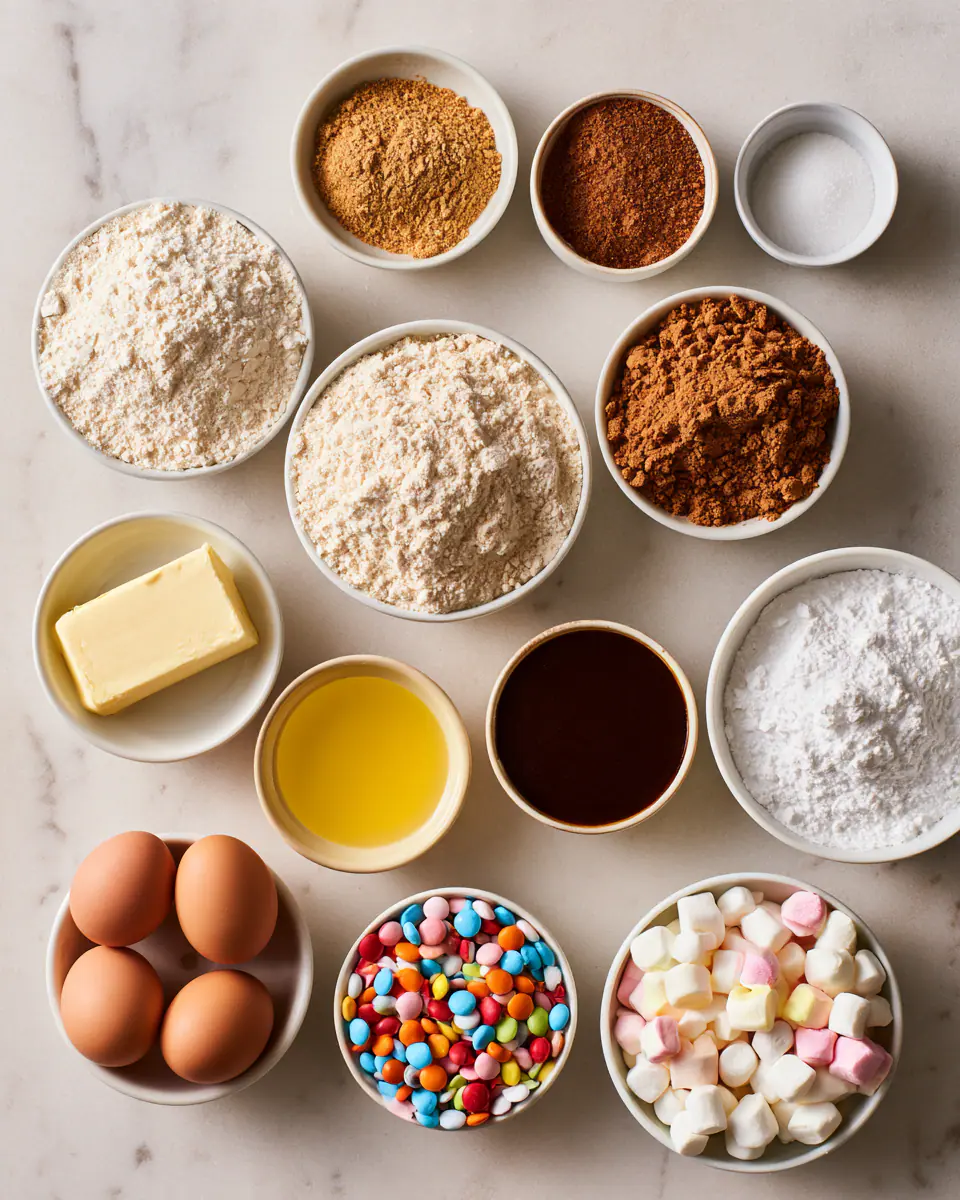
- All-purpose flour: gives the dough structure sturdy enough to stand as walls; bread flour works if you want an even firmer panel.
- Molasses: adds the deep color and classic flavor; dark corn syrup can sub in a pinch for a lighter color.
Ground ginger, cinnamon and cloves: these give the dough its warm spice base; nutmeg can replace cloves if you're out. - Brown sugar: adds moisture and a caramel note, keeping the baked panels from turning brittle.
- Unsalted butter: brings richness and helps the dough roll smoothly; margarine works but can soften the final snap.
- Egg whites: the base for the royal icing that glues and decorates the house; meringue powder is a common swap if raw egg whites worry you.
- Powdered sugar: thickens the royal icing to the right piping consistency; adjust with a few drops of water or extra sugar as needed.
- Candy and marshmallows: for decorating the roof, windows and yard; use whatever colors fit your theme.
Find exact amounts and quantities in the recipe card below.
Making Gingerbread House, Step by Step
- Mix the dough: cream butter and brown sugar until light, then beat in molasses and spices until the mixture turns a uniform dark brown.
- Chill and roll: wrap the dough and chill for at least an hour, then roll it a quarter inch thick directly on parchment paper.
- Cut templates: use cardboard patterns for walls, roof panels and trim, cutting through the dough with a sharp knife for clean edges.
- Bake the panels: bake at 325°F for 12 to 15 minutes, until the edges firm up and turn slightly darker than the center.
- Cool completely: let panels rest flat on the baking sheet for at least 30 minutes before moving them, so they don't warp or snap.
- Assemble with icing: pipe thick royal icing along the seams and press walls together, propping them with cans or jars until the icing sets firm, about an hour.
Mistakes to Avoid
- Skipping the chill step: unchilled dough spreads in the oven and loses its sharp edges, so always chill at least an hour before rolling.
- Moving panels too soon: warm gingerbread bends; wait until panels are completely cool and rigid before handling them.
- Thin royal icing: icing that's too loose won't hold walls upright; it should form stiff peaks and hold a ribbon trail briefly.
- Rushing assembly: glue and prop one wall at a time, letting icing set for 20 to 30 minutes between additions so the structure doesn't collapse.
Common Questions About Gingerbread House
How far ahead can I bake the panels?
Panels keep well at room temperature in an airtight container for up to a week before assembly, which makes planning the project across several days easy.
Why did my walls crack when I moved them?
This usually means the panels were still warm or slightly underbaked in the center; let them cool fully on the pan and bake until the edges feel firm.
What can I use instead of royal icing?
Melted sugar (an old-fashioned "sugar glue") works as a stronger, faster-setting alternative, though it hardens quickly so you'll need to work fast.
Life Size Gingerbread House
Ingredients
Method
- Cream butter and sugar: Beat the softened butter and brown sugar together until light and fluffy, about 3 minutes. The mixture should look pale and smooth before you move on.
- Add molasses and eggs: Mix in the molasses and eggs until fully combined, turning the batter a deep brown color. Scrape the bowl to make sure nothing sticks to the bottom.
- Combine dry ingredients: Whisk the flour, ginger, cinnamon, cloves, baking soda and salt together in a separate bowl. Gradually add this to the wet ingredients until a stiff dough forms.
- Chill the dough: Divide the dough into portions, wrap in plastic, and chill for at least 1 hour. This makes the dough firm enough to roll without sticking or tearing.
- Roll and cut templates: Roll chilled dough to a quarter inch thickness directly on parchment paper. Cut wall, roof and trim shapes using cardboard templates and a sharp knife.
- Bake the panels: Slide the parchment with cut dough onto a baking sheet and bake at 325°F for 12 to 15 minutes. The edges should turn slightly darker than the center and feel firm.
- Cool completely: Leave the panels on the baking sheet to cool fully for at least 30 minutes. Cooled panels should feel rigid and snap cleanly, not bend.
- Make royal icing: Beat the egg whites with lemon juice until foamy, then gradually add powdered sugar until the icing forms stiff peaks. It should hold a ribbon trail for a few seconds before melting back into the bowl.
- Glue the base walls: Pipe thick royal icing along the bottom edges and seams of two wall panels, pressing them together at a corner. Prop with cans or jars and let set for 20 to 30 minutes.
- Add remaining walls: Attach the remaining wall panels one at a time, propping each until the icing sets firm. Work slowly so the structure doesn't shift while drying.
- Attach the roof: Pipe icing along the top edges of the walls and lay the roof panels in place, holding them until they feel stable. Let the whole structure set for at least an hour before decorating.
- Decorate the house: Pipe icing details and press on candy and marshmallows for windows, doors and trim while the icing is still tacky. Let the finished house sit uncovered overnight to fully harden.
Keep Cooking
- Ultimate Giant S'mores Cookie Dough Pie: a rich dessert built for sharing, perfect alongside a holiday baking project.
- Creamy Crockpot Hot Chocolate | Cozy Family Treat: a warm drink to sip while the gingerbread panels cool.
- Better Than Anything Cake | Easy Crowd-Pleasing Dessert: a rich sheet cake that works well for a holiday dessert table.
- Easy 7 Brew Christmas Drink Copycat | Holiday Coffee Treat: a festive coffee drink to serve guests during the build.