Spicy Korean Ground Beef Noodles | Easy Weeknight Dinner
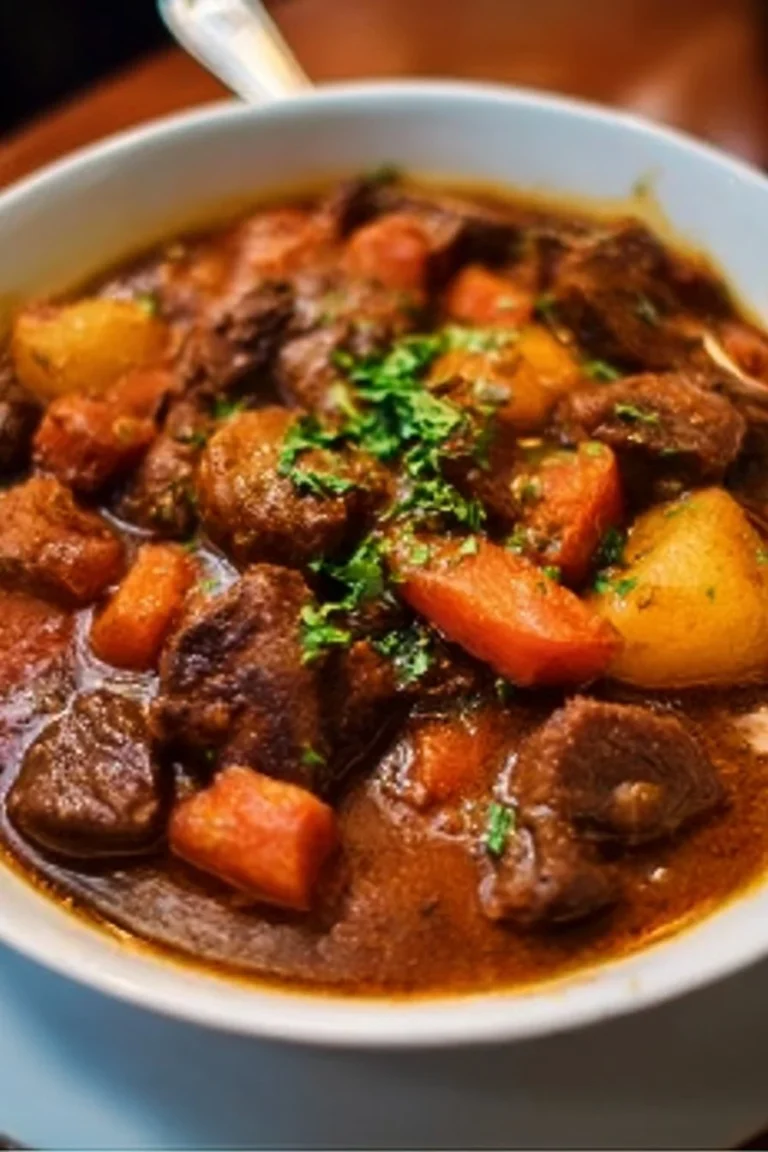
Spicy Korean ground beef ramen is a noodle dinner where ground beef simmers in a gochujang-spiked broth until the noodles soak up every bit of heat and savor.
It leans on ground beef, gochujang, garlic, and instant ramen noodles, and it's on the table in about 25 minutes. Keep this one handy for the nights you want something fast and warming.
| Prep | Cook | Total | Servings | Difficulty |
|---|---|---|---|---|
| 10 min | 15 min | 25 min | 4 servings | Medium |
Getting the Texture Right
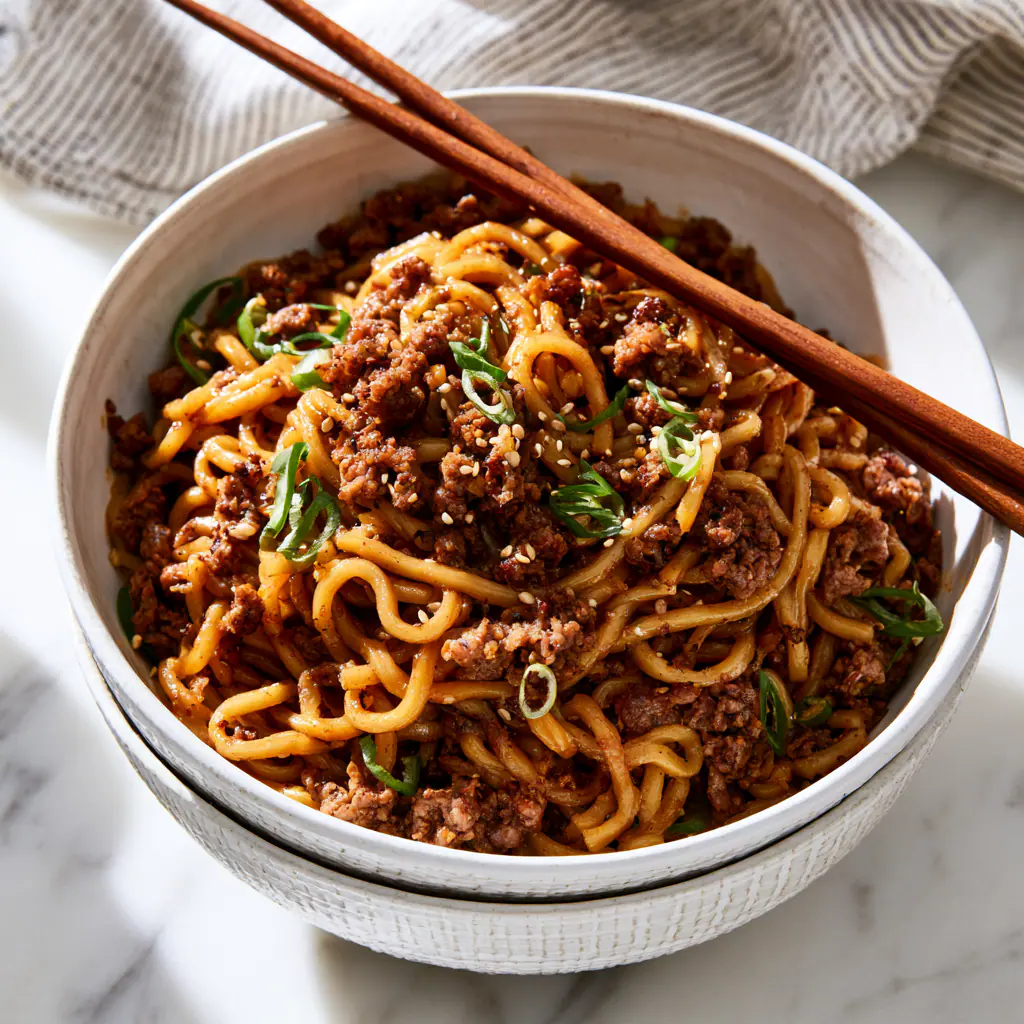
The ground beef needs real browning, not just a gray simmer. Press it flat in the hot skillet and leave it alone for a minute or two before breaking it apart; you'll hear a steady sizzle and see the edges turn deep brown. That browning builds flavor the broth alone can't give you. Once the beef is cooked through, the gochujang paste should fry in the rendered fat for 30 seconds, turning glossy and a shade darker, before any liquid goes in. Skip that step and the sauce tastes flat instead of rounded. The noodles go in last, straight into the simmering broth, where they cook just 2-3 minutes until tender but still with a slight chew at the center.
Korean Beef Noodles Ingredients
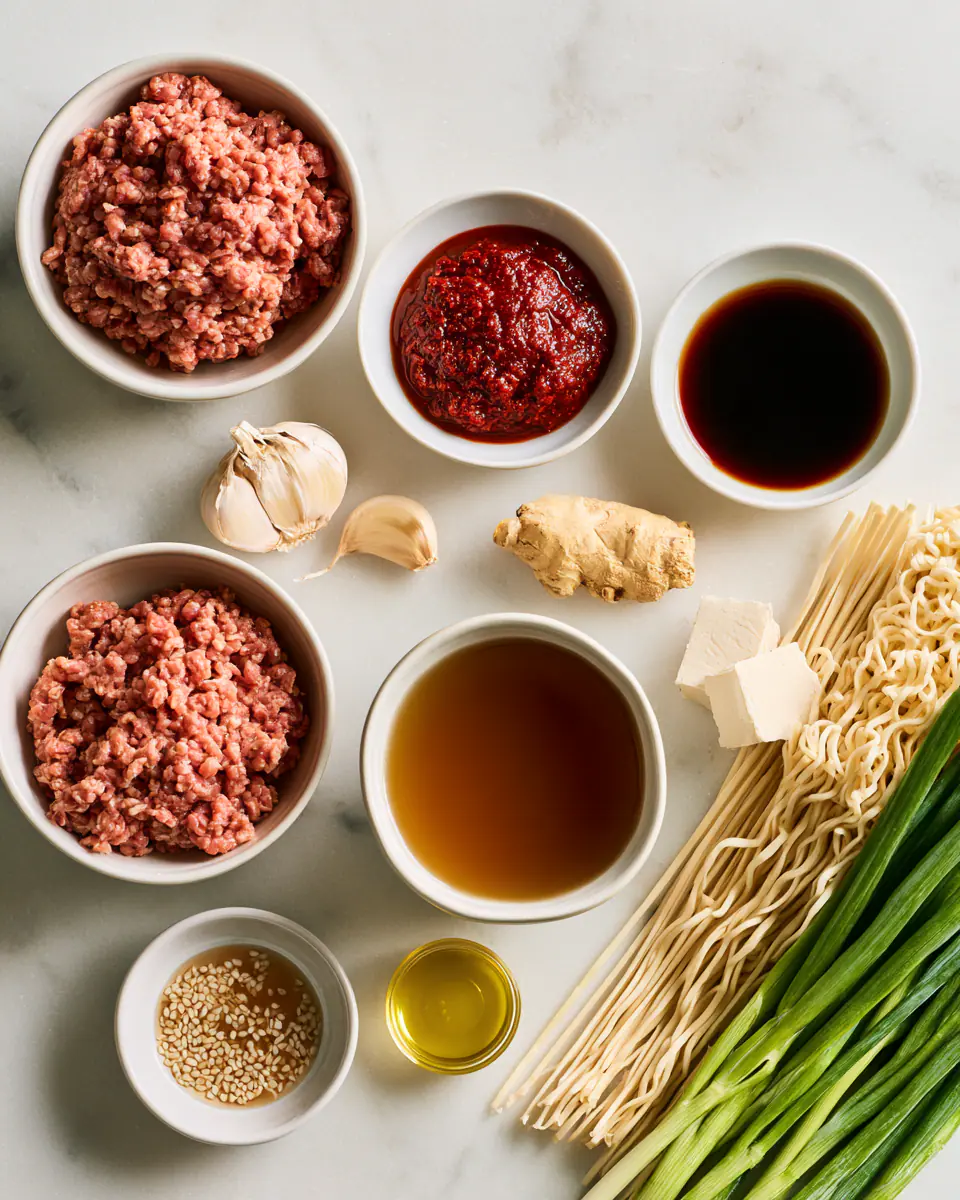
- Ground beef: brings richness and body to the broth; ground turkey works if you want something lighter.
- Gochujang: the fermented chili paste that gives the dish its signature heat and deep red color; sambal oelek mixed with a little brown sugar is a reasonable stand-in.
- Garlic and ginger: build the aromatic base; use garlic powder and ground ginger in a pinch, about a third of the amount.
- Soy sauce: adds salt and savory depth; tamari keeps it gluten-free.
- Instant ramen noodles: cook quickly and soak up the broth; any curly wheat noodle or udon works too.
- Beef broth: thins the sauce into a spoonable broth without diluting flavor.
- Scallions: add sharp, fresh color on top; chives are a fine stand-in if that's what you have.
- Sesame oil: finishes the dish with a toasty aroma.
See the recipe card below for exact amounts.
How We Make Korean Beef Noodles
- **Brown the beef.Cook ground beef in a hot skillet over medium-high heat, breaking it into crumbles, until well browned and no pink remains, about 6-7 minutes.
- Build the sauce. Add garlic, ginger, and gochujang to the beef and fry for 30 seconds until fragrant and glossy, then stir in soy sauce and beef broth.
- Simmer and cook the noodles. Bring the broth to a steady simmer, add the ramen noodles, and cook until just tender, 2-3 minutes, stirring to separate the strands.
- Finish and serve. Remove from heat, drizzle with sesame oil, and scatter scallions over the top before spooning into bowls.
Keeping and Reheating
Store leftovers in the fridge for up to 3 days; the noodles will soften further as they sit in the broth, so expect a thicker, stewier texture. Freezing isn't ideal since the noodles turn mushy on thawing. Reheat in a saucepan over medium heat with a splash of broth or water, stirring until warmed through, about 5 minutes.
Ways to Change It Up
- Swap the protein: ground turkey or finely chopped mushrooms keep the same texture with a lighter or meat-free result.
- Add seasonal vegetables: baby bok choy, spinach, or shredded carrots stir in well during the last 2 minutes of simmering.
- Adjust the heat: start with half the gochujang if you're sensitive to spice, or add a spoonful of chili oil for more.
- Make it a soup: double the broth for a brothier bowl closer to yukgaejang, the spicy Korean beef soup.
What to Serve With It
A side of quick-pickled cucumbers cuts the richness of the broth, while a bowl of Korean Veggie Fried Rice (One-Pan) turns this into a fuller spread. For something sweet after, South Korean Croffles make an easy dessert that needs little extra effort.
Korean Beef Noodles: Your Questions
What does gochujang taste like?
It's spicy, slightly sweet, and savory from fermentation, closer to a thick chili paste than a hot sauce. A little goes a long way in building flavor.
Is this dish very spicy?
As written it has a moderate, steady heat rather than a sharp burn. Reduce the gochujang by half if you prefer something milder.
Can I use fresh ramen instead of instant noodles?
Fresh ramen noodles work well and often cook even faster, so check them a minute earlier than the package suggests.
How do I keep the noodles from getting mushy?
Add them at the very end and pull the pan off the heat as soon as they're tender; residual heat keeps cooking them in the bowl.
Spicy Korean Ground Beef Noodles
Ingredients
Method
- Heat the skillet: Heat vegetable oil in a large skillet or Dutch oven over medium-high heat until shimmering, about 1 minute.
- Brown the ground beef: Add ground beef and press it flat, letting it sit undisturbed for 1-2 minutes before breaking it into crumbles. Cook until deeply browned and no pink remains, about 6-7 minutes.
- Add aromatics: Stir in garlic and ginger and cook until fragrant, about 30 seconds, stirring so they don't burn.
- Fry the gochujang: Add gochujang directly to the beef and fry it in the rendered fat for 30 seconds, until glossy and a shade darker.
- Build the broth: Pour in soy sauce and beef broth, scraping up any browned bits from the bottom of the pan. Bring to a simmer over medium heat.
- Simmer to blend flavors: Let the broth simmer uncovered for 5 minutes so the flavors meld and the liquid reduces slightly.
- Cook the noodles: Add the ramen noodles directly to the simmering broth, pressing them down to submerge. Cook until just tender, 2-3 minutes, stirring to separate the strands.
- Check seasoning: Taste the broth and adjust with more soy sauce for saltiness or a spoonful of gochujang for extra heat.
- Finish with sesame oil: Remove the pot from heat and drizzle sesame oil over the noodles, stirring once to combine.
- Serve: Divide the noodles and broth among bowls and scatter sliced scallions over the top.
Keep Cooking
- Spicy Korean Beef Soup Yukgaejang | Cozy Comfort Dinner: a brothier, spicier beef soup for cold nights.
- Easy Korean Ground Beef Bowl | Weeknight Dinner Win: a rice-based version of the same savory ground beef flavors.
- Korean Oxtail Bone Broth Soup | Cozy Cold Weather Dinner: a slow-simmered broth for when you have more time.
- Homemade Korean Fermented Cabbage Kimchi: a tangy side that pairs well with any spicy noodle bowl.